

Why West Marin? Inside the $55 Million Plan for 54 Affordable Homes
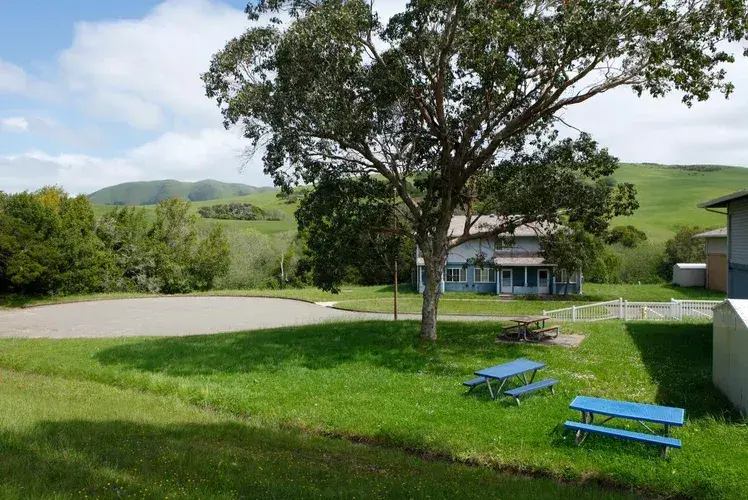
In a remote coastal community better known for beaches, oysters and weekend visitors, a long-vacant Coast Guard complex is becoming the largest affordable housing development in West Marin. The reasons why reveal who keeps the region running—and who can still afford to live there.
For more than a decade, 36 townhomes built for Coast Guard families have sat empty on the edge of Point Reyes Station. In a region where restaurant workers, teachers, caregivers and agricultural families struggle to live near their jobs, the sight has been difficult to miss: existing homes, boarded up in the middle of a housing shortage.
At first glance, this may seem like an unlikely place for West Marin’s largest affordable housing development. Point Reyes Station is a small, unincorporated community separated from Marin’s Highway 101 population centers by miles of winding two-lane roads. Its economy and public identity are shaped by tourism, agriculture and the surrounding national seashore—not by the kind of large employment center where affordable apartments are usually proposed. But that isolation is precisely what makes housing here consequential: the people who staff restaurants, schools, ranches, shops and essential services cannot easily absorb a long commute, and the community cannot function on visitors alone.
That may finally be about to change.
On September 9, Marin County announced that Tamalko Homes—the partnership between Eden Housing and the Community Land Trust Association of West Marin, better known as CLAM—had secured low-income housing tax credits expected to generate approximately $27 million in equity. The award fills the largest remaining hole in the financing plan for 54 permanently affordable rental homes at the former Coast Guard site. Construction is scheduled to begin in early 2027, with occupancy anticipated in the latter half of 2028.
This is good news. It is also revealing news.
Tamalko will be the largest affordable housing development ever built in West Marin. It will create 135 bedrooms, including scarce three- and four-bedroom homes for families. Nearly half of the apartments are expected to be reserved for households with a member who works in agricultural production or has retired from agricultural work. The rest will serve qualifying households earning from 30 to 60 percent of Marin’s area median income.
But those 54 homes are projected to cost $55.4 million—slightly more than $1 million per apartment. Marin bought the property from the federal government for $4.3 million in 2019, later sold the housing parcel to Tamalko Homes for $1, committed nearly $12 million in project funding, and may assume as much as $190,000 a year in wastewater expenses after the development opens.
So the fair headline is not simply that Marin is building affordable housing. The more important story is that a community fought to preserve this land for local housing, Congress intervened, a county bought and effectively donated the site, public agencies and philanthropy assembled more than $50 million—and residents will still have waited roughly 14 years from the Coast Guard’s departure to move in.
Tamalko Homes is a success. It is also an indictment of the system required to produce it.
What is actually being built
The project is an adaptive reuse of a 33-acre former Coast Guard housing complex at 100 Commodore Webster Drive, about half a mile east of downtown Point Reyes Station. Ten two-story buildings containing 36 townhomes will be rehabilitated. A former barracks will become 15 apartments, and another existing building will provide three more. A galley building will become a resident-services and community-education space, the playground will be rebuilt, and a new onsite wastewater treatment and recycling system will be installed.
The 54 apartments will range from one to four bedrooms and remain affordable in perpetuity under the County’s deed restriction. County documents say they will serve households at or below 30 to 60 percent of area median income. For a four-person household, those 2026 thresholds are approximately $58,020 to $116,040—a reminder that “low income” in Marin can describe a working family with earnings that would sound comfortable in much of the country.
These are affordable rentals, not a homeless shelter and not permanent supportive housing. That distinction matters. Some prospective residents may have experienced homelessness or displacement, but Tamalko is principally workforce and family housing. It addresses the conditions that push people out of West Marin before they become homeless: low wages relative to rents, tied housing that disappears with a job, extremely limited rental inventory and the near absence of multifamily homes.
Why agricultural workers?
At first glance, reserving nearly half of Tamalko’s apartments for agricultural households may seem odd. Marin is not generally perceived as farm country, and agriculture represents only a small portion of the county’s overall employment. Most residents experience Marin from the Highway 101 corridor, where its ranches, dairies, grazing lands and oyster operations are largely out of sight.
West Marin tells a different story. Marin County’s 2025 Crop and Livestock Report counted 154,000 acres of pasture, 11,500 cattle and calves, 10,300 sheep and lambs, substantial dairy and poultry production, and an $8.5 million aquaculture industry producing oysters, mussels and clams. Altogether, agricultural production was valued at approximately $94.1 million in 2025. Livestock, dairy and poultry dominate the numbers, but Marin agriculture also includes fruits and vegetables, nurseries, wine grapes, hay, silage and the shellfish farms along the coast.
The workforce is not enormous, but it is real and unusually concentrated in rural communities with almost no affordable rental supply. A County economic study estimated that agricultural production directly employed 586 people in 2023, with another 164 direct jobs in locally sourced food processing. Those figures are modest within Marin’s larger economy. In Point Reyes, Tomales, Marshall, Olema and the surrounding ranchlands, however, these workers are part of the infrastructure that sustains dairies, ranches, creameries, food businesses and the landscape visitors associate with West Marin.
Their housing is also unusually precarious because many agricultural jobs historically included a home on the ranch. Losing the job could mean losing both a paycheck and a front door at the same time.
That vulnerability became an emergency after the January 2025 Point Reyes National Seashore settlement. Eleven multigenerational lessees agreed to wind down 12 ranching operations within 15 months. When those operations closed, agricultural jobs ended and employer-provided homes disappeared with them. More than 40 West Marin households subsequently moved into interim affordable housing supplied by CLAM. Marin County estimates that approximately 150 low-income residents living on agricultural lands are experiencing homelessness or are at risk of it, including households affected by the closures and families living in substandard private-ranch housing.
The agricultural designation is also a financing decision. Tamalko won $11.55 million from California’s Joe Serna Jr. Farmworker Housing Grant Program—the program’s official name and more than one-fifth of the project’s stated development cost. In return, nearly half the apartments are expected to be reserved for households containing someone who works in agricultural production or has retired from agricultural work. The agricultural-worker component is therefore not a small charitable addition to a conventional affordable development. It is both a response to a specific local displacement crisis and a central part of the financing that made the entire project possible.
There is a reasonable long-term policy question here. If much of the Seashore’s ranching economy has now been eliminated, will West Marin need roughly 25 agriculturally restricted apartments for decades? The available numbers suggest the demand is not speculative: approximately 150 at-risk residents were identified on agricultural lands, and agricultural production continues elsewhere in Marin. Still, the County and developers should publish the exact number of restricted units, the final eligibility definition, what happens when a tenant retires or changes industries, and whether the restrictions can adapt if the workforce changes.
That is where Tamalko connects to homelessness in a concrete way. Housing policy is often discussed only after someone is living in a car or tent. Here, the public can see the chain much earlier: a rural industry contracts, a worker loses a job, employer-provided housing disappears, and a family suddenly has nowhere affordable to go. Tamalko cannot restore the lost jobs, but it can prevent the loss of employment from also becoming permanent displacement from the community.
A ten-year timeline—and several layers of government
The Coast Guard stopped using the property in 2014 and declared it surplus. Local residents and housing advocates recognized a rare opportunity: West Marin had an existing cluster of family-size homes on already developed land, outside the protected park and agricultural acreage that sharply limits where construction can occur.
The community’s advocacy reached Washington. Representative Jared Huffman pushed legislation requiring the Coast Guard to offer the site to Marin County at fair market value for permanent affordable housing or another public benefit. President Barack Obama signed the Coast Guard Authorization Act containing that mandate in February 2016.
Marin completed the $4.3 million purchase in December 2019. In April 2020, after a competitive process, the Board of Supervisors unanimously selected CLAM and Eden Housing over EAH Housing to redevelop the property. Supervisors cited the CLAM–Eden team’s community orientation as a deciding factor.
The choice paired two very different strengths. CLAM is rooted in West Marin and organized around permanently affordable land stewardship. Eden, founded by community activists in 1968, is one of California’s most experienced nonprofit housing developers and now manages roughly 10,000 affordable homes. CLAM could provide local trust, outreach and resident services; Eden could navigate the financing, construction and compliance machinery that a $55 million tax-credit development requires.
Progress was slow even by affordable-housing standards. In 2022, the developers were still describing a 51-unit plan and hoping for 2026 occupancy. Environmental review ran through 2024. After a 30-day public-comment period, Marin’s Deputy Zoning Administrator approved a mitigated negative declaration, coastal development permit and conditional use permit on August 29, 2024. No successful appeal or lawsuit followed.
On March 25, 2025, the supervisors approved $9.48 million in additional local financing, bringing the County’s total project commitment to just under $12 million. In October 2025, the project won the $11.55 million state agricultural-worker housing grant. On March 10, 2026, the Board approved the disposition and development agreement and the transfer of the housing parcel to Tamalko Homes. That action, taken on the consent calendar, gave the partnership the site control it needed to compete for tax credits.
The September tax-credit award is therefore not the beginning of the project. It is the financing breakthrough at the end of a long sequence of federal legislation, acquisition, developer selection, design, environmental review, local subsidy, state funding and land transfer.
It also illustrates a central problem with American affordable housing: every funding source can make a project possible, while every additional layer adds rules, legal work, design standards, reporting requirements and time. The result is a financing stack strong enough to build the homes—but complex enough to help explain their cost.
Who supported it—and who opposed it
Tamalko did not face the kind of organized anti-housing campaign seen around several other Marin developments. I found no opposition group, ballot effort, lawsuit or elected official publicly campaigning against it. The federal conveyance had broad local support, the Board selected the development team unanimously, and later funding and transfer decisions also advanced without a visible political revolt.
That does not mean there were no concerns. The environmental record includes comments about the new wastewater system, the adequacy of the domestic-water analysis, traffic safety at the entrance and the treatment of environmentally sensitive habitat. Two nearby residents urged the County to require a stop sign at the site’s exit, clarify the project’s water impacts and more specifically document protective measures around riparian areas. The County added a stop-sign condition and responded that the North Marin Water District had adequate supply and that existing environmental analysis and mitigation were sufficient.
Those commenters should not automatically be labeled project opponents. Their letters were framed as requests to revise the environmental report, not as demands to kill the affordable housing. At the final 2024 permit hearing, four people spoke and the permits were approved. The record shows scrutiny, particularly around infrastructure, but not a broad attempt to stop the 54 homes.
West Marin’s history helps explain why wastewater drew attention. When the Coast Guard complex was occupied, sewage had to be trucked away. Point Reyes Station rejected community sewer proposals in the 1980s and 1990s in part because residents feared that a sewer would unlock large-scale development. Tamalko’s solution is a self-contained treatment and recycling system with a leach field, avoiding a townwide sewer while serving the existing site.
The project’s most important champions span several eras. Residents and CLAM helped organize the original campaign to preserve the property for housing. Huffman secured the federal mandate. Former and current county officials carried the acquisition and approvals. District 4 Supervisor Dennis Rodoni, who grew up in Point Reyes Station and previously spent 21 years on the North Marin Water District board, became a consistent public supporter. Marin Community Foundation contributed $1.6 million. State housing officials supplied the agricultural-worker housing grant, and the California Tax Credit Allocation Committee supplied the financing decision that finally made construction viable.
The absence of a political villain may make this less dramatic than a conventional development fight. It makes the underlying policy problem more interesting: even with unusual community support, donated land, experienced nonprofits and elected officials aligned behind the project, it still took more than a decade to reach a construction date.
The million-dollar question
At $55.4 million for 54 homes, Tamalko’s projected development cost is approximately $1.03 million per apartment, or about $410,000 for each of its 135 bedrooms. That is a large number, and it deserves more than either outrage or a shrug.
Jason Ward, an economist who directs the RAND Center on Housing and Homelessness, told the San Francisco Chronicle that the cost was “astonishing.” He said a typical rehabilitation might cost $500,000 to $600,000 per unit, while acknowledging that California new construction can reach $1 million. County officials and the developers counter that Tamalko is not a typical rehabilitation.
They have a point. The buildings need extensive code and accessibility upgrades after sitting vacant since 2014. The barracks must be converted into apartments. The project includes unusually large family units, prevailing-wage construction, solar and efficiency improvements, community space, habitat protections and a new wastewater plant. Rural coastal construction carries higher transportation, insurance, labor and staging costs. Years of engineering, design and financing work also become part of the development bill.
But explanation is not the same as absolution. A public project costing more than $1 million per home should publish a clear final sources-and-uses budget, major change orders and per-unit cost comparisons when construction closes. Tax-credit financing is famously difficult for the public to follow. Residents should be able to see how much went to building rehabilitation, wastewater infrastructure, professional fees, financing, reserves and compliance—and how the final price compares with realistic alternatives.
The wastewater arrangement warrants particular attention. County staff estimate annual operations, maintenance and monitoring at about $250,000, adjusted for inflation. Tamalko Homes is to contribute $60,000 a year, leaving the County responsible for as much as $190,000 annually. The County committed to cover costs for five years and act as guarantor afterward while seeking ways to reduce monitoring costs, relocate a nearby well and obtain other public or philanthropic funding.
That ongoing public liability does not necessarily make the deal unsound. Without wastewater treatment, the homes cannot reopen. The system may also protect water quality better than the old arrangement. But the operating subsidy belongs in the public discussion. Five years at the maximum County share would approach $950,000 before inflation, on top of the land acquisition and development funding.
The financing assembled so far includes approximately $27 million in tax-credit equity, $11.55 million from the state agricultural-worker housing program, nearly $12 million in County-controlled housing and community funds, $1.6 million from Marin Community Foundation and other local support. Earlier this year, the County conveyed the housing parcel to Tamalko Homes for $1, while retaining other portions of the property, including the wastewater parcel.
This is not a private developer receiving $55 million and walking away with 54 market-rate assets. The apartments will be income-restricted, the land carries affordability controls, and tax-credit investors receive federal and state tax benefits in exchange for equity and long-term compliance. Still, the public is buying a public benefit at a premium price. Both halves of that sentence matter.
How Tamalko fits Marin’s housing policy
Marin’s state-approved 2023–2031 Housing Element requires unincorporated areas to plan for 3,569 additional homes across income levels. Tamalko supports the plan’s first program—maintaining adequate sites for the Regional Housing Needs Allocation—and its 54 units can count as actual affordable production rather than merely zoning capacity on paper.
Yet 54 units equal only about 1.5 percent of the unincorporated County’s 3,569-home planning target. Tamalko is consequential in Point Reyes Station, but it cannot carry Marin’s countywide obligation. Nor can a once-in-a-generation conversion of federal property become a repeatable production strategy; there are not dozens of empty Coast Guard complexes waiting to be reclaimed.
The project is better understood as one piece of a broader West Marin housing policy. The County has restricted short-term rentals in coastal communities to preserve homes for residents. It declared a shelter crisis after ranch closures displaced workers and families. It purchased a separate site at Sixth and B Streets in Point Reyes Station for interim housing and eventual permanent development. It funds homelessness prevention and tenant assistance. Tamalko adds the durable supply those programs cannot create on their own.
That combination matters. Emergency assistance may keep a household housed, but it does not add a vacant apartment. A short-term-rental cap may preserve residential supply, but it does not create a deeply affordable family home. Shelter can prevent a family from sleeping outdoors, but it is not a permanent lease. Tamalko does something different: it adds homes that will remain below market permanently.
If Marin wants the project to be a model rather than an exception, the transferable lesson is not “find another federal base.” It is to assemble land, infrastructure decisions and local money earlier; approve adaptive reuse predictably; and reduce the years in which inflation, financing and professional fees accumulate before a shovel reaches the ground.
Will 54 affordable homes lower West Marin housing prices?
Not in a way a homeowner or buyer is likely to detect.
Point Reyes Station’s typical home value was about $1.59 million in July, according to Zillow. Redfin’s three-month data showed a median price around $1.6 million, but only one sale—a sample too small to treat as a reliable trend. Fifty-four deed-restricted rentals entering service in 2028 will not reset prices for coastal single-family homes, especially because the units cannot be bought and sold on the open market.
They are also unlikely to lower market rents across Marin County. The County has hundreds of thousands of residents, and Tamalko’s tenants will be selected under income rules rather than through the ordinary rental market. At the countywide scale, 54 units are statistically small.
At the local scale, however, “small” is the wrong measure. West Marin’s housing stock is 93 percent single-family homes, according to the County-cited Growing Together report. Nearly half of renter households earn below 50 percent of area median income, and almost one quarter spend more than half their income on housing. In a place with so few multifamily rentals, 54 apartments and 135 bedrooms represent a meaningful addition.
The likely economic effects are less about lowering a median and more about changing who can remain in the community:
-
Employers may recruit and retain workers who otherwise face long, expensive commutes from Petaluma, Novato or farther away.
-
Families may remain in local schools, helping stabilize enrollment and the public funding tied to it.
-
Agricultural, hospitality, restaurant, caregiving and public-service workers may spend more of their income locally instead of on fuel and commuting.
-
Older residents and retired agricultural workers may be able to stay near their networks rather than leave the coast.
-
Fifty-four households will be insulated from the market rent increases that can turn a temporary setback into displacement or homelessness.
There could also be modest upward effects on local demand for groceries, services and childcare once the long-vacant site is occupied. More residents mean more customers and workers. The project may add vehicle trips, but it also allows some employees to live closer to West Marin jobs rather than commuting into the area. The net transportation effect will depend on where residents work and whether practical transit options improve.
For existing property owners, a large decline in values is not the most likely outcome. Research on tax-credit housing finds that price effects vary with neighborhood conditions: some studies find neutral or positive effects, while a prominent Stanford analysis found modest declines in certain higher-income areas and gains in lower-income neighborhoods. Tamalko is also rehabilitating a deteriorating, fenced and vacant complex rather than replacing an occupied use. The honest caveat is that Point Reyes Station has so few annual transactions that any future price claim—positive or negative—will be difficult to isolate from interest rates, insurance costs, broader Bay Area demand and the peculiarities of individual homes.
The project’s real price effect is private rather than marketwide: for the households selected, it breaks the link between coastal scarcity and what the highest bidder can pay. That is the purpose of permanently affordable housing. It does not make every home cheaper. It creates a protected part of the market where nurses, agricultural workers, teachers, cooks, caregivers and seniors are not required to compete with $1.6 million home values.
The human test
Housing debates can become abstract remarkably quickly—units, allocations, tax credits, environmental documents, cost per door. The people most affected do not experience the crisis as a spreadsheet.
They experience it as losing a job and a home at the same time because the home came with ranch work. It is a child leaving a school because the family could not find another rental. It is an older worker leaving the community where friends, doctors and language support are located. It is commuting an hour each way to serve meals or care for someone in a town where the worker cannot afford to live. At the worst point, it is a family moving into a vehicle while public agencies decide which program has authority to help.
Caring about homelessness means caring about what happens before the sidewalk. Tamalko will not solve chronic homelessness, and it should not be advertised as if it will. But permanent affordable homes are among the most concrete forms of prevention. They give families something emergency programs cannot manufacture: a stable place to remain after the temporary crisis has passed.
That makes the project worth celebrating. The scrutiny should come from wanting more of it, faster and at a cost the public can sustain—not from questioning whether lower-income families belong in Point Reyes Station.
What Marin should report next
Between now and the anticipated 2028 move-in, the County and developers should make the project unusually transparent. A useful public dashboard would show the final development budget; construction milestones and schedule changes; major change orders; wastewater capital and annual operating costs; the final bedroom and affordability mix; the number of agricultural-worker-designated homes; application and lottery procedures; local and multilingual outreach; and, after occupancy, resident retention and the share of tenants who work in or have long ties to West Marin, to the extent fair-housing rules allow that information to be collected and reported.
Marin should also explain clearly how people will apply. “Local preference” rules are constrained by fair-housing law and cannot simply guarantee apartments to current residents. The agricultural-worker set-aside provides a lawful occupational qualification for designated units, but other apartments will be open to eligible applicants under the approved marketing plan. The community deserves plain-language information well before leasing begins, in English and Spanish, so access does not depend on insider knowledge.
Finally, officials should treat Tamalko’s timeline as data. Which years were consumed by unavoidable environmental and infrastructure work? Which delays came from funding cycles, fragmented approvals or decisions that could be standardized next time? If Marin merely celebrates the ribbon cutting, it will miss the chance to learn why already-built homes remained empty for 14 years.
A victory, with a warning attached
Tamalko Homes is the kind of project that is easy to support: existing buildings on publicly acquired land, permanent affordability, family-size apartments, environmental review completed, broad community backing and a direct connection to the people who keep West Marin functioning.
The $27 million tax-credit award means it is finally moving from promise toward construction. That is a real achievement by CLAM, Eden Housing, Marin County, local advocates, funders and the public officials who protected the property from another use.
But the project should make Marin uncomfortable, too. If 54 broadly supported homes on an existing residential site require federal legislation, a $1 land transfer, more than $50 million in layered financing, a decade of work and a continuing public wastewater subsidy, the region does not yet have a housing-production system. It has a heroic exception.
By 2028, lights may again be on in the old Coast Guard homes. Children may be walking to school from Commodore Webster Drive. Agricultural workers, seniors and service employees may have leases that do not disappear with a job or a landlord’s decision to sell. For those families, 54 will not feel like a small number.
The next test is whether Marin can learn enough from the cost and delay to make the next 54 homes less heroic—and more ordinary.
Reporting notes and principal sources
- Marin County: September 2026 tax-credit announcement
- Marin County: March 2026 project and property-transfer summary
- Marin County: project environmental-review record
- Marin County Board staff report: disposition, funding and wastewater obligations
- Eden Housing: Tamalko Homes project description
- CLAM: Coast Guard redevelopment
- Point Reyes Light: September 2026 financing report
- San Francisco Chronicle: cost and housing-market analysis
- Congressman Jared Huffman: 2016 federal conveyance legislation
- Marin County: 2023–2031 Housing Element
- Marin County: 2025 Crop and Livestock Report
- Marin County: economic contributions of agriculture
- Marin County: Point Reyes National Seashore settlement and displaced-family response
- Zillow: Point Reyes Station home values
- Redfin: Point Reyes Station market data
- Stanford research: neighborhood effects of tax-credit housing
Jory Bergman Killian is a Marin and Sonoma County Realtor, real estate investor and housing provider who follows the intersection of housing policy, affordability and local market conditions. CA DRE #02283148.
Categories
Recent Posts


GET MORE INFORMATION